
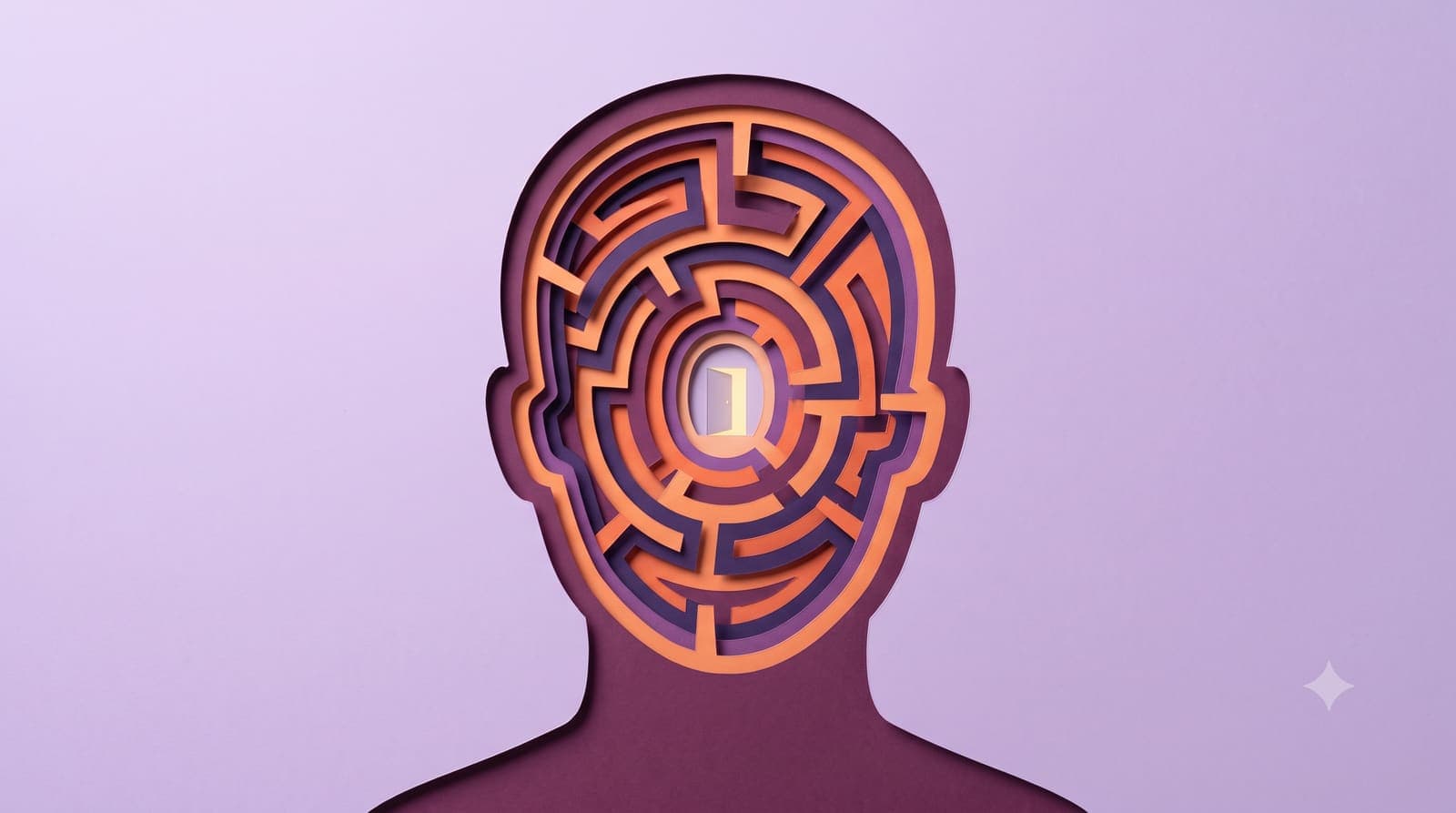
Overthinking doesn’t always feel dramatic.
It’s not always panic or breakdowns.
Sometimes, it’s just a quiet loop in your mind that never stops.
You replay conversations. You second-guess decisions. You imagine outcomes that haven’t happened—and probably won’t.
And the worst part?
It feels like you’re being “careful” or “aware.”
But in reality, you’re stuck.
Overthinking is less about thinking too much—and more about thinking without resolution.
Let’s look at the signs that show it’s happening.
1. You Replay Conversations in Your Head
You leave a conversation, and hours later, it’s still playing in your mind.
“What did they mean?”
“Did I say something wrong?”
This pattern is closely described in The Power of Now, where Eckhart Tolle explains how the mind keeps dragging you into the past instead of allowing you to stay present.
Example:
You send a simple message and then keep checking it, wondering how it might be interpreted.
2. You Struggle to Make Simple Decisions
Even small choices feel heavy.
What to reply
What to choose
What to say next
In The Subtle Art of Not Giving a F*ck, Mark Manson highlights how over-analysis creates unnecessary pressure by making everything feel important.
Example:
Spending 20 minutes deciding how to respond to a simple text.
3. You Always Imagine Worst-Case Scenarios
Your brain automatically jumps to “what if something goes wrong?”
This is a protective mechanism—but over time, it becomes exhausting.
In Feeling Good: The New Mood Therapy, David D. Burns calls this catastrophizing—a thinking pattern where the mind exaggerates negative outcomes.
Example:
A small delay turns into “something bad must have happened.”
4. You Find It Hard to Relax
Even when you try to rest, your mind doesn’t stop.
You sit down—but mentally, you’re still active.
Example:
Watching something but thinking about work, problems, or conversations at the same time.
This constant mental activity keeps your nervous system alert.
5. You Overanalyze Your Own Thoughts
You don’t just think—you think about your thinking.
“Why did I think that?”
“Does this mean something about me?”
In You Are Not Your Brain, Jeffrey Schwartz explains how people get trapped when they start identifying too closely with their thoughts.
Example:
Questioning your own emotions instead of simply experiencing them.
6. You Delay Taking Action
Overthinking creates the illusion of progress—but often leads to inaction.
You plan, analyze, and rethink… but don’t move.
Example:
Wanting to start something but spending days thinking instead of starting.
Clarity doesn’t come from thinking.
It comes from doing.
7. You Seek Constant Reassurance
You ask others:
“Is this okay?”
“Did I do the right thing?”
Not because you don’t know—but because you don’t trust your own judgment.
Example:
Double-checking decisions even after you’ve already made them.
8. You Feel Mentally Exhausted Without Doing Much
Overthinking drains energy.
Even if you haven’t done anything physically, your mind feels tired.
Example:
Feeling exhausted after a day of “just thinking.”
This is real fatigue—not laziness.
9. You Struggle to Stay Present
Your mind is either:
stuck in the past
worrying about the future
Rarely in the present moment.
This disconnect is one of the core ideas in Wherever You Go, There You Are, where Jon Kabat-Zinn emphasizes the importance of awareness and presence.
Why Overthinking Feels So Hard to Stop
Because it feels useful.
It tricks you into believing:
you’re solving problems
you’re being careful
you’re gaining control
But in reality, you’re just going in circles.
How to Break the Overthinking Loop
Not by forcing your mind to stop—but by changing how you respond to it.
1. Notice the Pattern (Without Fighting It)
The moment you recognize:
“I’m overthinking right now”
You create distance from it.
Awareness weakens the loop.
2. Shift From Thinking to Action
Even a small step helps.
Action breaks the cycle faster than analysis ever will.
3. Limit “Mental Replays”
If something already happened, thinking about it repeatedly won’t change it.
Ask:
“Is this helping me right now?”
If not, let it go.
4. Train Your Mind to Return to the Present
Simple practices help:
focusing on your breath
noticing your surroundings
grounding yourself
This reduces mental noise.
5. Accept Uncertainty
You don’t need to figure everything out.
Some answers come with time—not thought.
Key Takeaways
Overthinking is repetitive thinking without resolution
It often feels helpful but creates stress
Awareness is the first step to breaking the cycle
Action reduces overthinking more than thinking does
Presence is the long-term solution
Final Thought
Overthinking doesn’t mean you’re weak.
It usually means you’re trying too hard to get everything right.
But life doesn’t work that way.
You don’t need perfect clarity to move forward.
You just need enough to take the next step.
And often, that step is where clarity actually begins.
FAQs
What causes overthinking?
It is usually caused by anxiety, fear of uncertainty, and the need for control.
Is overthinking a mental illness?
Not necessarily, but it can be linked to anxiety and stress-related conditions.
How do I stop overthinking at night?
Try reducing screen time, practicing deep breathing, and writing down your thoughts before sleeping.
Can overthinking affect health?
Yes, it can lead to stress, fatigue, and sleep issues over time.
What is the fastest way to stop overthinking?
Shifting your focus to action or physical activity can help interrupt the cycle quickly.