
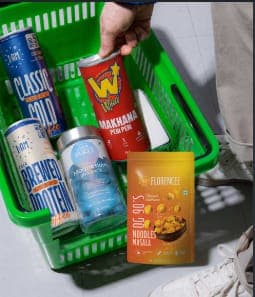
In fast-moving consumer categories, packaging is often the first real interaction between a customer and a brand.
A shopper may only spend a few seconds looking at a product before deciding whether it feels relevant. On ecommerce and quick-commerce platforms, that decision can happen even faster because products appear as small thumbnails beside dozens of alternatives.
That is why strong FMCG branding should begin before the visual design stage.
Businesses investing in FMCG Brand Strategy and Design need to think about positioning, customer expectations, packaging hierarchy and brand recognition as parts of one connected system.
Start With Brand Positioning
Before designing a package, a business should be clear about what it wants consumers to remember.
Two products in the same category can target very different audiences.
For example, one beverage brand may focus on health and everyday wellness, while another may position itself around bold flavours, fun and social occasions.
Even if both sell similar products, their packaging should communicate completely different personalities.
Clear positioning gives design a purpose. Without it, brands can end up with packaging that looks attractive but says very little about why the product is different.
Packaging Needs a Clear Hierarchy
FMCG packaging usually has a lot to communicate.
It may need to show:
the brand name
product name
flavour or variant
key benefit
important claims
quantity
supporting information
The problem starts when everything is given the same visual importance.
A good package guides the customer’s attention. The most important information should be easy to notice first, while secondary details should support the buying decision.
This makes the packaging easier to understand and less overwhelming.
Recognition Comes From Consistency
Strong brands are usually easy to recognise, even before consumers read every word on the pack.
That recognition often comes from repeated visual elements such as typography, colour combinations, logo placement, illustrations, patterns and packaging structure.
These elements do not need to look exactly the same everywhere, but they should feel connected.
A customer may see the brand in a supermarket, on Instagram, on an ecommerce platform or through an advertisement.
If each touchpoint feels unrelated, the brand becomes harder to remember.
Consistency helps build familiarity over time.
Digital Shelves Need Different Thinking
Packaging that works well in a physical store may not perform equally well online.
On a mobile screen, details become much smaller.
This means brands should test packaging at realistic thumbnail sizes.
A few simple questions can help:
Can the brand name still be recognised?
Can customers easily tell one variant from another?
Does the product still stand out beside competing products?
Are the most important messages still visible?
These checks are becoming increasingly important as more consumers discover and compare FMCG products online.
Build for Future Product Expansion
Many FMCG businesses start with only one or two products.
If the brand grows, it may introduce new flavours, pack sizes or completely new categories.
A flexible brand system makes that expansion much easier.
For example, different flavours may use different colours, while typography, logo placement and the overall packaging structure remain consistent.
This gives each product its own identity while still making it obvious that the products belong to the same brand family.
Without a clear system, every new launch can start looking like a separate brand.
Avoid Following Every Category Trend
Design trends can influence entire product categories.
Once one successful brand introduces a certain style, other brands often begin using similar colours, typography or layouts.
That can quickly lead to sameness.
Instead of asking only what looks popular, brands should focus on what makes their own positioning different.
A better question is:
What should consumers remember about this brand after seeing it once?
That answer should influence the design far more than short-term trends.
Branding Is More Than Appearance
Good FMCG branding is not simply about making a product look attractive.
A strong brand system can help:
communicate positioning more clearly
improve recognition
organise growing product ranges
create consistency across different channels
support future marketing and product launches
Packaging works best when it is connected to the wider brand strategy rather than treated as a separate design task.
Final Thoughts
FMCG markets are crowded, and consumers have more choices than ever.
Strong branding helps products communicate quickly and remain recognisable across physical stores, ecommerce platforms and other digital touchpoints.
The most effective approach combines brand strategy, visual identity and packaging into one clear and scalable system.
When all of these elements work together, the brand becomes easier to understand, easier to recognise and better prepared for future growth.
Backlink used once: FMCG Brand Strategy and Design → https://dndesigns.co.in/fmcg-branding
Give for 2nd website
For the 2nd website — Publisha, use a different anchor but the same DN Designs backlink.
Website: Publisha
Target URL: https://dndesigns.co.in/fmcg-branding
Anchor: Consumer Brand Design for FMCG
Title:
Why Consumer Recognition Should Guide FMCG Brand Design
A product can look good and still be difficult to remember.
That is a common challenge in FMCG categories, where shoppers are surrounded by similar products, competing claims and increasingly polished packaging. Whether someone is standing in a supermarket aisle or scrolling through a quick-commerce app, brands often have only a few seconds to make an impression.
This is where Consumer Brand Design for FMCG becomes important. Good design should not simply make a pack attractive. It should help people recognise the brand, understand the product and distinguish it from competing options.
Recognition Goes Beyond the Logo
A logo is only one part of a brand identity.
Consumers often recognise products through a combination of visual elements before they consciously read the brand name. A certain colour combination, illustration style, typography or packaging structure can become closely associated with a brand.
These distinctive elements become stronger when they appear consistently.
Think about a customer who first discovers a product through social media and later sees it on an ecommerce platform. If the same visual cues appear in both places, the second interaction already feels familiar.
That familiarity matters.
Packaging Should Be Easy to Understand
FMCG packaging often has to communicate a surprising amount of information in a limited amount of space.
There may be a brand name, product name, flavour, benefit, ingredients, claims, quantity and other details competing for attention.
Trying to emphasise everything usually makes the pack harder to understand.
Instead, brands should decide what a shopper needs to notice first.
The brand and product type may take priority, followed by the flavour or most important benefit. Supporting information can then sit lower in the visual hierarchy.
Good design does not necessarily communicate less information. It organises information better.
Product Ranges Need a Visual System
Things become more complicated when a brand has several products.
Imagine a food brand with six flavours or a personal-care brand with multiple variants.
Each product needs to be distinguishable, but it also needs to look as though it belongs to the same family.
One practical approach is to decide which elements remain consistent and which can change.
The logo placement, typography and overall layout may stay fixed. Colours, ingredient imagery or illustrations can then change according to the variant.
This creates variety without losing recognition.
Ecommerce Has Changed the Design Test
Packaging is no longer viewed only at full size.
On ecommerce and quick-commerce platforms, consumers often see products as small thumbnails.
Details that look impressive on a large design presentation may disappear completely on a mobile screen.
That makes it useful to test packaging at smaller sizes.
Can someone still recognise the brand?
Can they tell two flavours apart?
Is the main product message still visible?
Does the pack remain distinctive when placed beside competitors?
These questions can reveal design problems before a product reaches the market.
Consistency Should Extend Beyond Packaging
Customers interact with brands through many different channels.
Packaging may be only one of them.
They might also see advertisements, websites, marketplace listings, social media posts, retail displays and promotional material.
If each touchpoint feels completely different, the brand becomes harder to recognise.
That does not mean every design needs to be identical. Different channels have different requirements.
What matters is maintaining enough common visual language to make the experience feel connected.
Don't Let Trends Replace Brand Identity
Design trends can be useful inspiration, but following them too closely can cause several brands in the same category to look almost identical.
A trend may become popular precisely because it works. But once everyone begins using the same colours, typography and layouts, it stops creating differentiation.
Brands should therefore consider a more useful question:
What should people remember about this particular brand?
The answer could come from the brand's personality, audience, product benefit, heritage or positioning.
Those ideas can then shape the visual identity rather than allowing temporary design trends to control it.
Build With Future Products in Mind
A new FMCG brand may launch with only one product.
That rarely remains the case if the business grows.
New flavours, pack sizes and product categories may eventually be introduced.
A flexible identity makes expansion easier.
Instead of redesigning the brand every time a new SKU is launched, businesses can use an established system and adapt it.
This also helps consumers recognise new products as part of a brand they already know.
Good Design Makes Decisions Easier
Ultimately, FMCG design should make the customer's experience simpler.
The shopper should not need to study a package for a long time to understand what it is.
Clear hierarchy helps people process information.
Consistent visual assets build familiarity.
Distinctive packaging makes products easier to identify.
And a scalable system helps the brand remain consistent as it grows.
Final Thoughts
The strongest FMCG identities are not necessarily the loudest or most complicated.
They are the ones consumers can recognise and understand quickly.
When brand strategy, packaging and visual identity work as one system, every consumer interaction becomes an opportunity to reinforce recognition.
For FMCG businesses competing across retail and digital channels, that consistency can be far more valuable than simply creating a package that looks attractive