
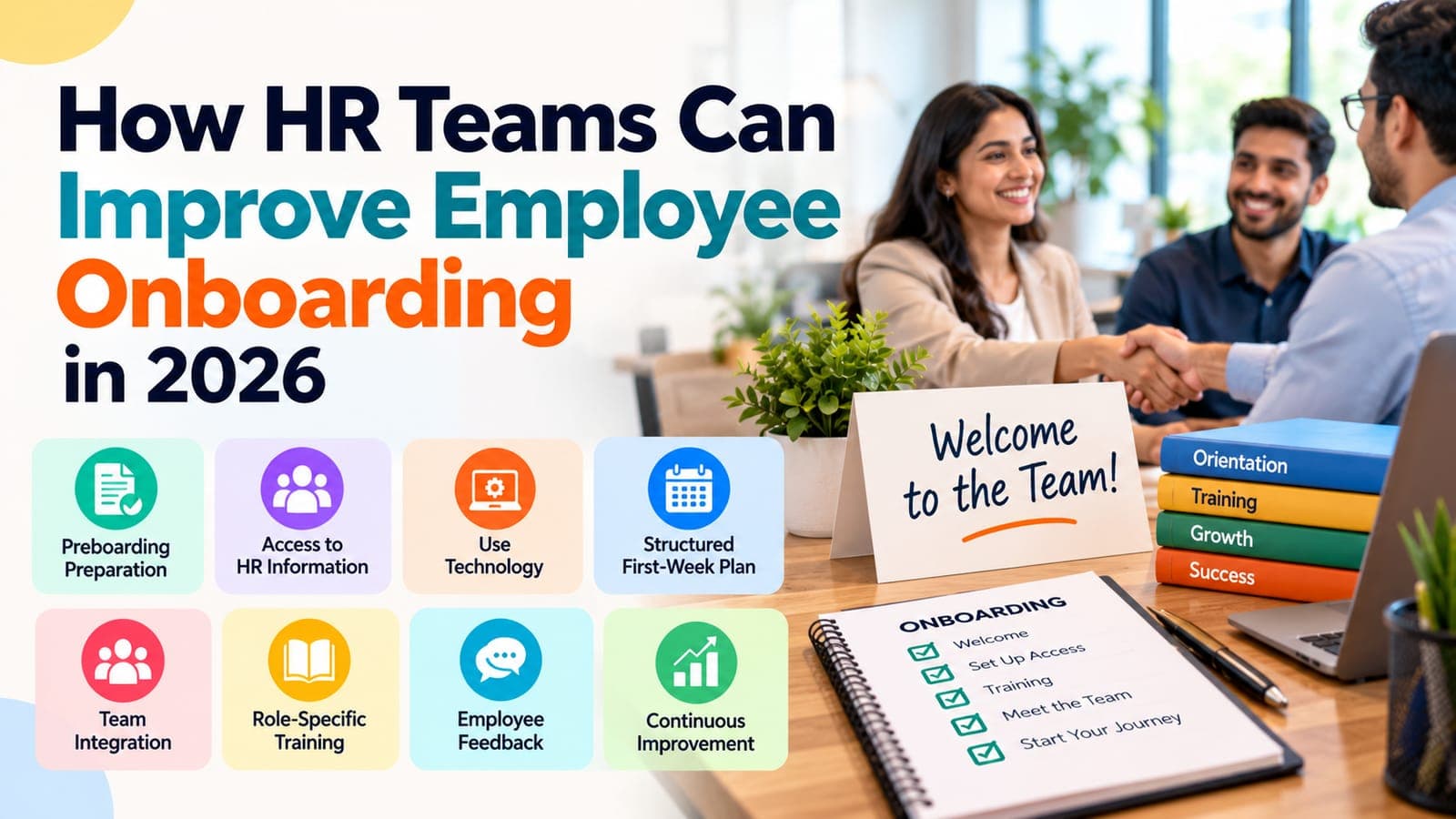
Employee onboarding is one of the first major experiences a new employee has with an organization. A well-organized onboarding process can help employees understand their responsibilities, connect with their teams and become familiar with the organization's workplace practices.
In 2026, HR teams are increasingly using digital tools and automation to make onboarding more organized while still maintaining personal interaction.
Start Before the First Day
Onboarding does not have to begin when an employee arrives at the workplace. HR teams can start the process before the joining date.
Important documents, company information, workplace policies and basic instructions can be shared with the employee in advance. This gives new employees an opportunity to understand what to expect before their first day.
A simple preboarding process can also reduce confusion about reporting times, required documents, workplace locations and initial responsibilities.
Make HR Information Easy to Find
New employees often have many questions during their first few weeks.
They may want to know how to apply for leave, whom to contact about payroll, what workplace policies apply to them or where they can find important HR documents.
A centralized digital HR resource can make this information easier to access. HR teams can organize policies, templates, frequently asked questions and employee resources in one location.
Platforms such as HR Help Board can also provide useful HR information, templates and workplace resources for professionals and employees.
Use Technology for Routine Tasks
Onboarding includes several repetitive administrative activities.
HR technology can help manage tasks such as:
Employee information collection
Document submission
Policy acknowledgement
Training schedules
Orientation reminders
HR communication
Task tracking
Automating routine activities allows HR professionals to spend more time interacting with new employees rather than manually tracking every onboarding step.
Create a Clear First-Week Plan
A new employee should know what to expect during the first few days.
HR teams and managers can prepare a simple first-week schedule covering orientation, introductions, training sessions, team meetings and initial assignments.
A structured plan can make the transition easier and help the employee understand how their role fits within the organization.
Connect New Employees With Their Teams
Technology can support onboarding, but personal interaction remains important.
Managers can introduce new employees to colleagues and explain how the team works. Assigning a colleague or onboarding buddy can also give the new employee someone to approach with everyday questions.
These interactions can help new employees become familiar with workplace communication and team practices.
Provide Role-Specific Training
Not every employee needs the same onboarding program.
HR teams can provide general organizational information while managers focus on role-specific training.
For example, a new recruiter may need training on recruitment processes and hiring systems, while a finance employee may require training on financial procedures and reporting tools.
A combination of general and role-specific training can make onboarding more relevant to the employee.
Collect Feedback During the Process
Onboarding should not be treated as a one-time activity.
HR teams can ask new employees for feedback after their first week, first month or first few months.
Useful questions might include:
Was the onboarding information easy to understand?
Did you receive the resources you needed?
Were your responsibilities clearly explained?
Was it easy to communicate with your manager?
What could improve the onboarding experience?
Feedback can help HR teams identify gaps and improve future onboarding programs.
Use Data to Improve Onboarding
HR analytics can help organizations understand how their onboarding process is performing.
Organizations can examine measures such as onboarding completion rates, training participation, employee feedback and early employee turnover.
These metrics can help HR teams identify areas that may need improvement.
However, data should be interpreted alongside feedback from employees and managers rather than viewed in isolation.
Keep Improving the Employee Experience
A strong onboarding process is not simply about completing forms and introducing company policies. It is about helping employees understand their role, workplace and expectations.
Digital tools can make onboarding faster and more organized, while HR professionals and managers provide the communication and human support that new employees need.
As HR technology continues to develop in 2026, organizations can combine automation, employee resources, analytics and personal interaction to create a more consistent onboarding experience.